Basel Without a Tour: Trams, Ferries and the Old Town
Basel is an easy city to see on your own. The Old Town is small, the trams are free for hotel guests, and the river has its own ferries. This guide shows you how, and where one of the Basel Switzerland guided tours still earns its fare.
Do you need a tour in Basel at all?
No. You can walk the Old Town in a morning with a map, cross the Rhine on a ferry, and reach the museums by tram. Nothing in the city is ticketed at the gate, because there is no gate.
What a guide adds is the story and the route. You would find the Minster and the market square yourself, but not the quiet lanes and courtyards behind them, or the stories behind the town hall. For a day trip, a guide adds something else: the connections.
So a fair plan is this. See the city on your own, book one guided walk if you want the stories, and book a guided day only for the trips that are hard to plan.
What does the guest card cover?
If you stay the night in a Basel hotel or holiday flat, you get the BaselCard with your booking. It is free, and it gives you:
- free second-class trams and buses in Basel and the surrounding zones, for your whole stay, up to 30 days;
- a free first ride from the airport or the station to your hotel, using your booking confirmation as the ticket;
- 50% off a list of attractions, including Basel Zoo, a city tour, scheduled Rhine boat trips and the evening box office at Theater Basel.
It does not reach everything. The Vitra Design Museum, over the German border in Weil am Rhein, is outside its zones, and so is the Reigoldswil–Wasserfallen cable car. Our visitor guide has the rest.
Crossing on the ferries
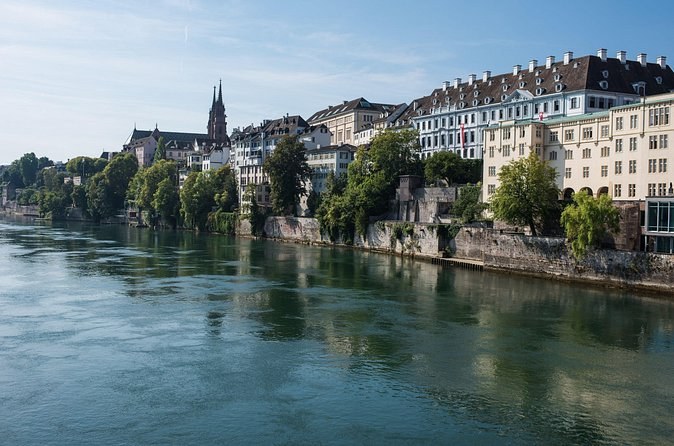
Four ferries cross the Rhine: Wild Maa at St. Alban, Leu at the Minster, Vogel Gryff at Klingental and Ueli at St. Johann. Each hangs from a long wire cable across the river and is pushed over by the current alone, with no engine. They run all year.
Take the Leu, the Münster ferry, for the view: crossing from Kleinbasel to Grossbasel gives you the best sight of the Minster. The St. Johann ferry can be boarded with a manual wheelchair or a pushchair on both banks. If you are staying a few days, try all four: each crossing gives you a different stretch of the river.
Free and cheap museum hours
The Kunstmuseum Basel lets you into its collection free on Tuesday, Thursday and Friday from 5pm to 6pm, on Wednesday from 5pm to 8pm, and on the first Sunday of every month, holidays excluded. It is closed on Mondays.
The BaselCard takes 50% off a list of attractions, so check it before you pay at a door. The Fondation Beyeler in Riehen, just outside the city, recommends booking your ticket online to avoid waiting, and its new buildings open from 26 September 2026.
A Swiss Travel Pass, if you have one, also includes free entry to more than 500 museums across Switzerland.
A self-guided Old Town loop
Allow two hours at an easy pace. It climbs, so wear good shoes.
- Barfüsserplatz. Start at the Tourist Information office in the Stadtcasino.
- The Tinguely Fountain, by the theatre, where the city's own walk meets.
- Up to the Minster on its hill, built between 1019 and 1500 in red sandstone.
- The Pfalz, the terrace behind it, for the view up and down the Rhine.
- Down to Marktplatz and the red Rathaus, still the seat of the cantonal government.
- Out to the Spalentor, one of the city gates, then back through the lanes to the river.
Finish at the Mittlere Brücke and cross, or take the Münster ferry for the view. Our Old Town walking route goes stop by stop.
How do you reach the three-country point?
The Dreiländereck, where Switzerland, France and Germany meet, is on the Rhine harbour, downstream of the Old Town. You can see towards it from the Pfalz, which Basel Tourismus says looks as far as the border triangle.
To stand there, you have two easy choices. The audio-guide bus stops at it for ten minutes. The Rhine cruise sails out to the harbour, past the cranes and cargo ships, and turns within sight of all three countries. If you would rather go on your own, ask the Tourist Information office for the tram or bus that suits your hotel, and use your guest card.
The audio-guide bus as a middle way
If you want commentary without a guide, the bus is the middle way. It spends two hours on a panorama bus from Steinenberg 6, with an iPad audio guide in eight languages, Wi-Fi and a Läckerli biscuit. It stops for photos at St. Johanns-Park and at the three-country point, and costs $36.
Know what it is. You see most sights from the window, and one traveller counted only two stops where the group got off. For the Old Town lanes, walk.
Day trips by train on your own
Most of the Alpine day trips are rail journeys from Basel SBB, so you can do them yourself. Lucerne, Interlaken, Thun and the Lauterbrunnen valley are all on the Swiss network. What you give up is the planning, the guide and, on the Lucerne day, a reserved panoramic seat.
Alsace is different. Colmar is 40 minutes by train, and you can walk it on your own. But the villages and the Haut-Koenigsbourg castle are harder to string together by train.
A guided rail day earns its fare when the route has changes, a boat and a mountain railway in it. Our guide to choosing a day trip sorts the days by how hard they are to do alone.
Is the Swiss Travel Pass worth it from Basel?
It depends on how many days you ride. The pass starts at $351 for three days, which is about $117 a day. It covers public trains, buses and boats across Switzerland, free entry to more than 500 museums, and free rides on Rigi, Stoos and Stanserhorn. Most other mountain railways are up to half price.
Two things cost extra. Panoramic trains need a paid seat reservation. And the pass does not say whether it covers Pilatus, so check before you plan around it. Children up to 15 travel free with a parent.
For three days of trains, the pass is cheaper than the guided Lucerne day at $391, which covers one. Read its terms before you pay: they give both 24 and 48 hours for cancellation, and a pass cannot be changed once issued. The full comparison is in the pass or a guided day.
When does a guide earn the money?
- On your first morning, when two hours with a guide teach you the city for the rest of your stay.
- On a day with connections, such as Pilatus, where the train, the boat, the cable car and the cogwheel railway must join up.
- In Alsace, where the villages and the castle need a vehicle.
- When you want the stories, not just the sights.
Can you hire a private guide by the hour?
Yes. The custom private walk runs two, three, four, six or eight hours and collects you at your hotel or the cruise terminal, at $87 a person. The private walk with a professional guide costs $443 for a group of up to 15. The private walk with trams and ferries paid runs three to four hours for two or more, at $233 a person.
How do the options compare?
Here is seeing the city on your own against the three ways to add a guide.
| Option | Cost a person | What you get | When |
|---|---|---|---|
| On your own | Free, plus what you visit | The route you plan | Any time |
| The audio-guide bus | $36 | Two hours, two photo stops, a recorded guide | Set departures |
| The city's own walk | $31 | Two hours with a live guide | Set departures |
| A small-group walk | $43 to $135 | Ten or fewer, a named start | Set departures |
| A private guide | $87 a person, or $443 a group | Your route, your pace | Your time |
Ready to add a guide? The walks are compared on Basel walking tours, and the bus, the boat and the bike on Basel city tours.
Frequently asked questions
Do I need a guide to see Basel?
Is the BaselCard a tour ticket?
Do I need a car in Basel?
How do I get from the airport to Basel?
Can I do the day trips by train on my own?
Can visitors swim in the Rhine?
Is there a Basel bus tour?
Tours for travellers who mostly go it alone
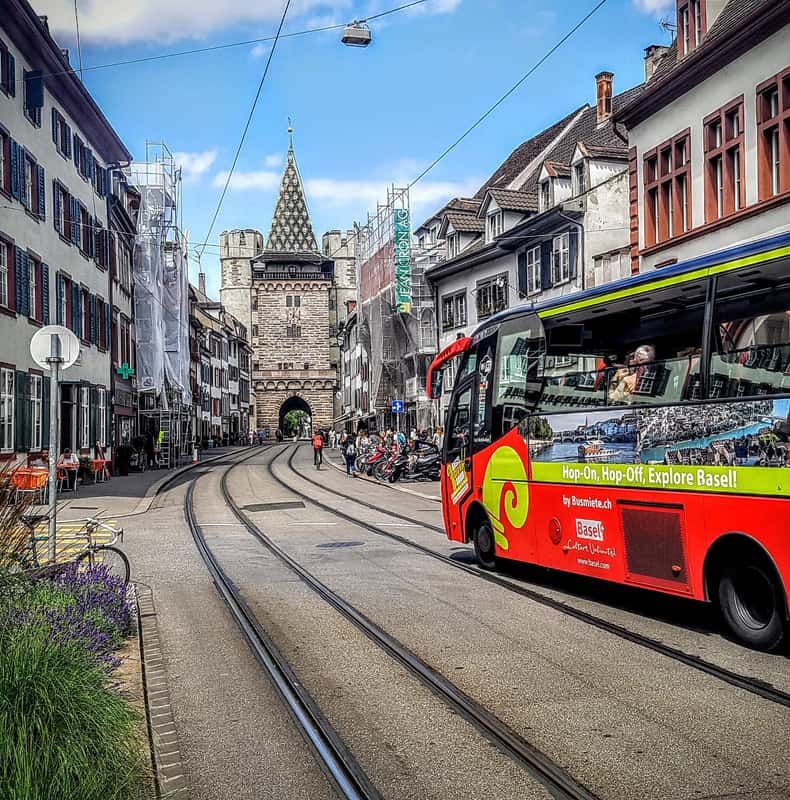
Basel: Sightseeing Bus Tour with Audio Guide
Two hours round the city on a panorama bus from the Stadtcasino, with an iPad audio guide in eight languages, Wi-Fi and a Läckerli on board. Short photo stops at a park and at the point where three countries meet.
From $36 per person
Check Availability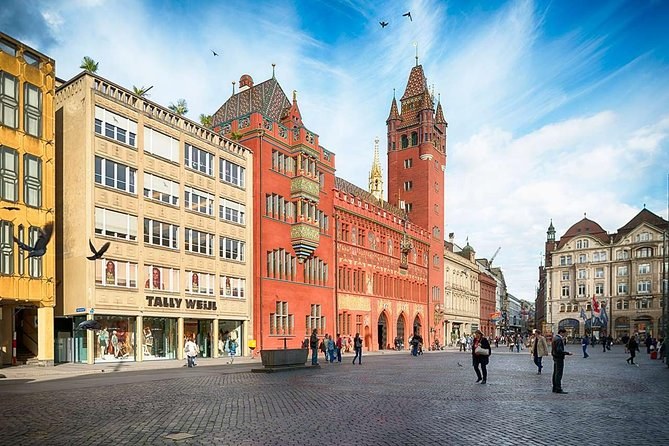
Discover Basel's Charm: Exclusive Private Walking Tour
Three to four hours with a private guide for two or more, on foot and by tram, bus and ferry, with every fare between the stops paid. The meeting point is agreed after you book.
From $233 per person
Check Availability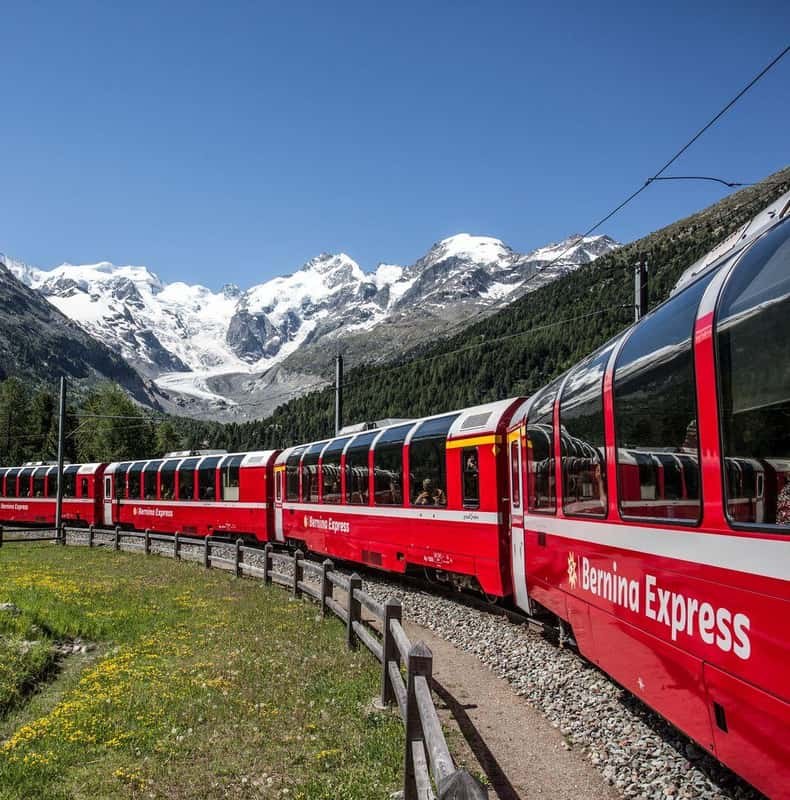
Swiss Travel Pass: Unlimited Travel on Train, Bus & Boat
Unlimited public trains, buses and boats across Switzerland for three to fifteen days, with museum entry and discounts on mountain railways. Panoramic seats cost extra, and children up to 15 ride free with a parent.
From $351 per person
Check AvailabilityNext: See what the guided options cost in Basel tour prices and what each fare includes. Every fare sits side by side on Basel Switzerland Tours.